
“Yash, let’s invest ₹30 Lakhs in Gold today.”
This urgent request came from Ms. Nina (name changed), a homemaker living in the US who leads her family’s investment decisions. When I asked why today and why gold, she sent me a viral video from a popular financial influencer. Everyone else around her was buying, and online hype created an immediate, anxious urgency to jump in.
I paused and asked her a few clarifying questions: “Nina, how much gold do you currently own? What is your target asset allocation? And is this for the short term or long term?”
After a long silence, she replied, “I only have a rough idea of my current holdings. I haven’t decided on a target percentage, but this purchase is definitely for the short term.”
I followed up with a critical reality check: “What if gold prices crash 20% next week?”
Another pause. “Then we will just keep it intact for the long term and buy more if possible.”
The Cost of Impulsive Investing
Nina’s story is a regular conversation I have with many of my clients. Today, social media has successfully democratised financial literacy, but it has also triggered a massive crisis of Information Overload.
This endless flood of real-time data, breaking news alerts, and finfluencer hype creates an environment where investors make highly impulsive decisions. This reactive behavior—buying on hype, panicking during a dip, or refusing to book a loss out of stubborn pride—systematically damages portfolios that were originally built with care, structure, and patience.
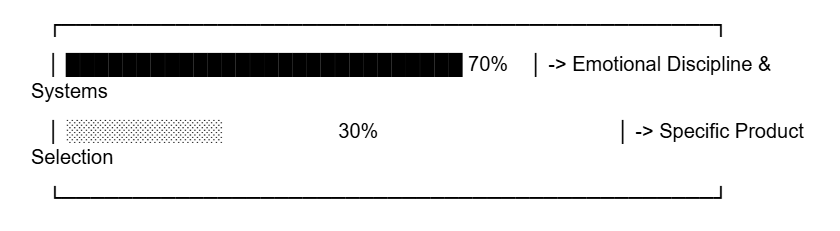
The harsh reality of investing is simple: Portfolio performance is 70% driven by your emotional interventions and only 30% by the actual financial assets you choose.
PORTFOLIO SUCCESS DRIVERS
The Solution: Build a Definitive System
An investment portfolio should never be left unchecked, but it must be managed through a structured process rather than daily emotional reactions. If breaking market news dictates your mood and gives you sleepless nights, your strategy relies on luck, not a system.
To protect your wealth from information overload, you must implement a simple, repeatable 5-Step Portfolio Framework:
- Assess Your Risk Profile: Quantify exactly how much downside volatility you can tolerate without panicking.
- Write Down Explicit Goals: Define precisely what each pool of money is fighting for (e.g., retirement, education).
- Filter Your Options: Evaluate investment products strictly based on how they fit your specific risk profile.
- Map Assets to Objectives: Anchor every single investment to a concrete goal and an explicit time horizon.
- Set a Fixed Review Calendar: Define an immutable schedule (e.g., bi-annually) to review and rebalance. Block out all noise between these dates.
Why Even Experts Need Advisors
Even with a perfect system, human psychology is a formidable opponent. Information overload skews perspective, making it incredibly difficult to remain completely objective about your own money.
As a financial professional, I experience this exact bias myself. That is why I rely on my own financial advisor to guide my personal capital. No matter how good a doctor is, it is always difficult to treat your own child. An objective, external partner removes emotion from the equation, keeping you accountable to your long-term plan.
Turn off the daily financial noise, stop reacting to the viral trends of the day, and let a structured system do the heavy lifting for you.
Happy Investing!
🛠️ Stop Reacting, Start Structuring
Is information overload driving your recent investment choices? Let’s take the emotion out of your financial strategy. Contact us to schedule a 1-on-1 portfolio review session today, and let’s build a robust, noise-free system tailored to your long-term family goals.